
You have written and signed your will, but what happens if your family can’t find it when they need it most? Creating a will is an important step in protecting your wishes, but storing the original signed document safely is just as important.
So, where should I store my will to make sure it remains safe while still being accessible to my executor? Losing, damaging, or misplacing the original will can cause unnecessary delays, legal complications, and disputes during the probate process. In some cases, your estate may even be distributed under intestacy rules instead of according to your wishes.
This guide explains the safest storage options, their pros and cons, and how to ensure your executor knows where to find the original when it matters most.
Where Should I Store My Will?
Once you have signed your will, the next important step is deciding where to keep the original. The best storage option should protect your will from natural disasters, theft, and loss while making sure your executor can access it when needed.
Storage needs vary from person to person. You can keep your will in a secure home safe, with your lawyer, in a bank, in private safe deposit boxes, or use secure digital storage as a backup. The best option depends on the level of security you need and how easily your executor can access the document when needed.
Store Your Will in a Private Vault
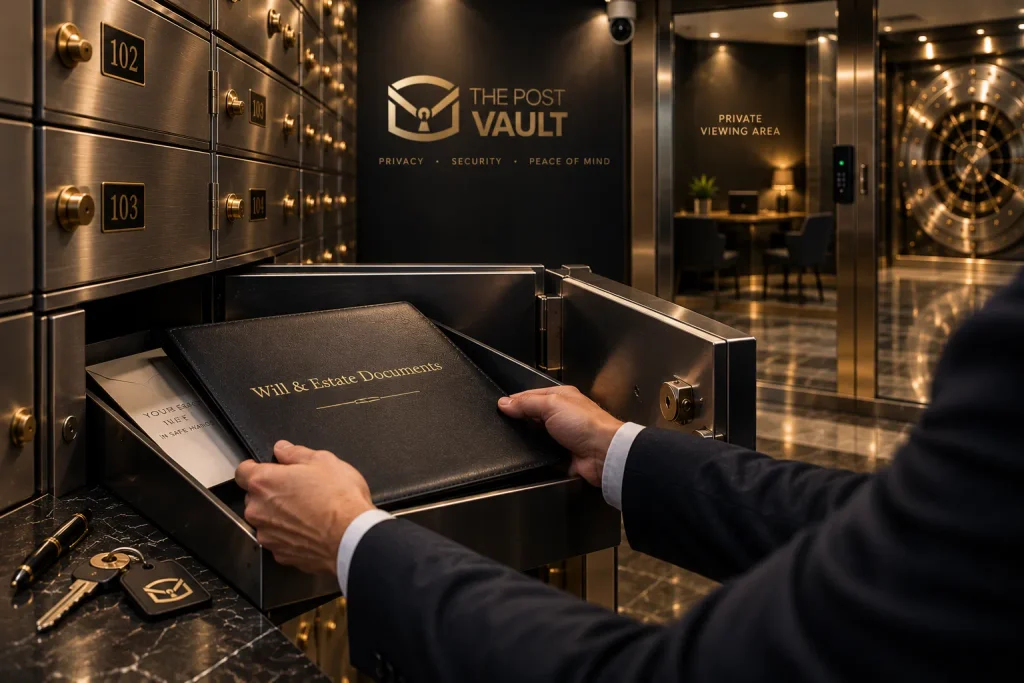
A private vault facility can provide another secure option for storing your original will. These facilities are designed to protect important documents in controlled environments and may offer features such as protection against natural disasters, restricted access, security monitoring, and secure document retrieval.
Private vaults can be especially useful if you do not want to keep your will at home or in a bank. Unlike a home safe, the document is stored away from your property, reducing the risk of loss, theft, or damage from an incident at home. The Post Vault offers a secure alternative for keeping your will safe, away from the risks of storing important documents at home.
Before choosing a private vault, check how the company handles access after your death and whether your executor can retrieve the original will without unnecessary delays. You should also confirm how the company verifies authorised individuals and what happens to your documents if the business closes or changes ownership.
If you choose private vault storage:
- Choose a reputable provider with strong security and document-protection measures.
- Confirm that the facility protects documents against natural disasters, theft, and unauthorised access.
- Ask how your executor will retrieve the original will after your death.
- Provide clear instructions about the vault to your executor or another trusted person.
- Check whether the provider maintains records of who deposited and retrieved the document.
- Review the storage agreement and ongoing fees.
- Keep your contact and executor information updated with the provider.
Store Your Will in a Home Safe
A secure safe at home can be a simple and affordable way to protect your original will. It gives you control over the document and makes it easy to review or update your estate planning documents when necessary.
However, home storage also comes with risks. The will could be lost, stolen, damaged, or forgotten if your family does not know where it is stored.
If you choose this option:
- Use a high-quality secure safe.
- Keep the safe somewhere secure but accessible.
- Make sure your executor knows where the safe is located.
- Give your executor the information needed to access it, such as a key or code.
- Avoid sharing the location or access details with unnecessary people.
For many people, a home safe combined with a secure digital backup can provide a practical balance between security and accessibility.
Keep Your Will with Your Lawyer
Some lawyers offer clients the option of storing their original will at the law firm. This can be a convenient choice because the lawyer or firm can keep the document securely and may be able to help the executor locate the original and begin the probate process.
Professional custody can also reduce the risk of accidentally losing or damaging the will. However, you should confirm how the firm handles will storage and what happens if the lawyer retires, moves, or closes the practice.
If your lawyer stores your will, make sure:
- Your executor knows which lawyer or firm has the original.
- The firm has your current contact information.
- You understand how the will document is released after your death.
- You know what happens to stored wills if the firm closes or changes ownership.
Store Your Will at the Bank
Multiple banks also provide strong physical protection against theft and other risks. However, it may not always be the easiest place for your executor to retrieve the original will after your death.
Depending on local law and the bank’s procedures, your executor may need to provide specific documentation or obtain court authority before accessing the box. This can create delays, particularly when the original will is needed to begin the probate process.
If you decide to use a safe-deposit box, check the bank’s rules in advance and make sure your executor knows:
Keep a Secure Digital Backup
- Which bank and branch holds the box.
- How the box can be accessed after your death
- Whether they have authorised access.
- What documents the bank will require.
A scanned copy of your signed will can be extremely useful as a backup and reference, especially if the original is stored somewhere else. You can keep a digital copy in an encrypted cloud service, secure digital vault, or other protected location.
However, a digital copy generally should not be treated as a replacement for the original signed will where the original is legally required for probate.
For better digital security:
- Use a reputable encrypted storage service.
- Protect the account with a strong password and multi-factor authentication.
- Keep your digital backup updated if your will changes.
- Make sure your executor knows that the digital copy exists and how to locate it.
- Keep important digital account information organised separately and securely.
Which Storage Solution Fits Your Needs?
The right storage method can make all the difference. But which option gives you the best balance of space, performance, and cost? Let’s explore the table below to compare the key features of home safes, banks, safe deposit boxes for documents, and other storage options to help you choose the solution that best fits your needs.
| Storage Options | Security | Access After Death | Cost | Best For |
|---|---|---|---|---|
| Private vault | Very high | Depends on provider’s release process | Ongoing fee | Secure independent storage |
| Home safe | Good | Easy when access details are known | Low/one-time cost | Convenient personal access |
| Bank safe-deposit box | Very high | May involve restrictions or legal steps | Ongoing fee | Strong physical protection |
| Lawyer/attorney custody | Very high | Usually coordinated through the law firm | May involve a fee | Professional oversight |
| Digital backup | Good for copies | Quick access to a copy | Often low | Backup and organization |
What Can Happen If a Will is Not Stored Properly?
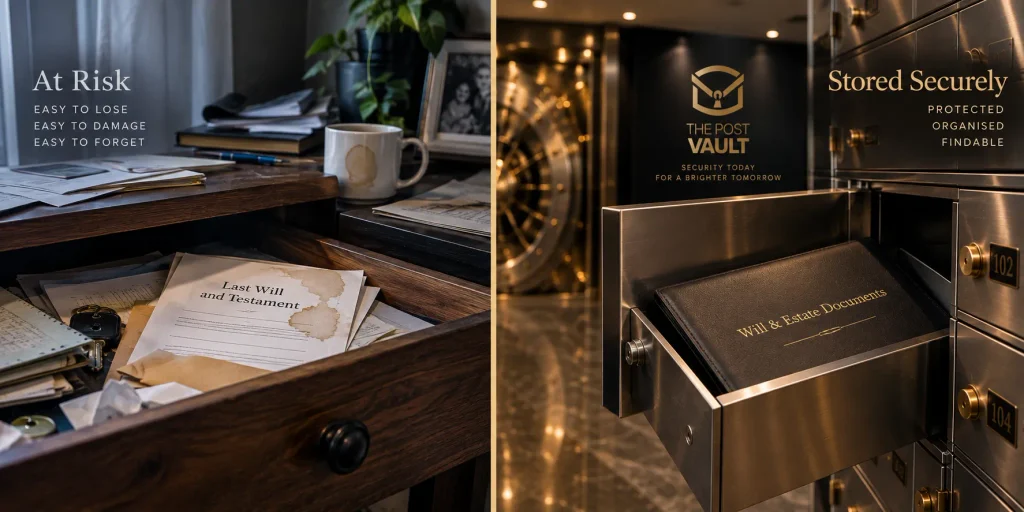
Creating a will is only half the job; making sure the original can be found when it is needed is just as important. A will contains your final wishes, so keeping the original signed document safe helps protect those wishes and makes the probate process easier for your executor and family.
If your will is lost, damaged, destroyed, or cannot be located after your death, it can lead to unnecessary delays, additional legal costs, and disputes. In some circumstances, if a valid original will cannot be found, your estate may be dealt with under intestacy rules rather than according to the wishes you recorded in your will.
Improper storage can expose your Will to several risks, including:
- Natural Disasters: The original document could be destroyed by natural disasters.
- Loss or misplacement: Your family or executor may not know where to look for it.
- Theft or unauthorised access: Someone could remove, damage, or interfere with the document.
- Probate delays: If the original cannot be located quickly, the estate administration process may take longer.
- Family disputes: Uncertainty about the will can create disagreements among beneficiaries and other family members.
- Additional legal costs: Missing or damaged documents may require extra legal steps to establish what your wishes were.
For these reasons, simply putting your will somewhere out of sight is not enough. It should be stored in a secure location that your executor can access when the time comes.
What’s Worth Keeping in a Safe Deposit Box?
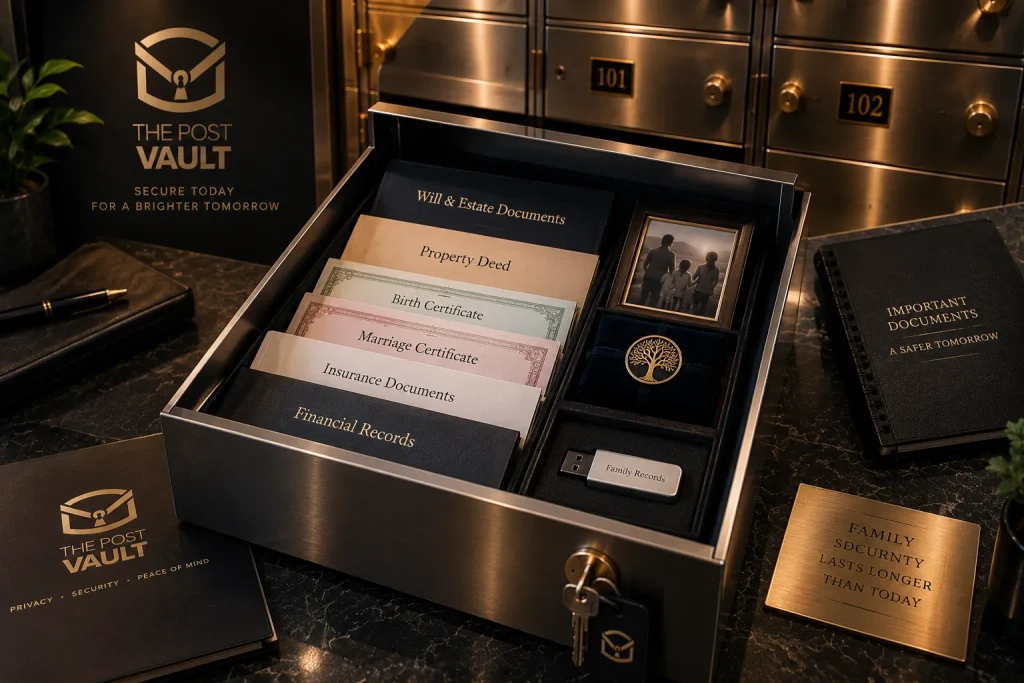
A safe deposit box can be a smart place to keep important documents and valuables that you want protected from everyday risks. If you are wondering what documents to keep in a safe deposit box or what you can store in a safe deposit box, here is a list:
- Wills and estate planning documents
- Property deeds and ownership documents
- Birth, marriage, or other important certificates
- Insurance policies and key financial records
- Rare collectibles and family heirlooms
- Jewellery and other valuable items
- Important legal documents
- Backup copies of irreplaceable personal records
Looking for an alternative to a traditional bank facility? The Post Vault provides a secure place to keep important documents and valuables while helping ensure they can be located and accessed when needed.
Also Read: Where to Store Property Deeds Safely: Home, Bank or Private Vault?
What are the Steps to Rent a Safe Deposit Box?
If you are considering keeping your will in a safe deposit box, it’s important to choose a secure storage option and understand how access works. Knowing how to rent a safe deposit box can help you protect your will and other important documents while ensuring they can be located when needed.
- Choose a trusted provider: Compare reputable banks or private vault providers based on security, accessibility, and storage options.
- Select the right box: Choose a size that comfortably fits your Will, important documents, and other valuables.
- Complete the rental process: Provide the required details, review the agreement, and complete the necessary paperwork.
- Check the terms and fees: Understand the rental cost, access rules, insurance or liability terms, and any restrictions on what you can store.
- Arrange authorised access: Consider who should have access to the box and how your Will can be located if it is needed after your death.
- Store your will securely: Place your will and other important belongings inside the box and keep a record of where they are stored.
- Tell the right person where it is: Make sure a trusted person knows that your Will is in a safe deposit box and understands how it can be accessed when required.
Why Choose The Post Vault?
When it comes to protecting important documents and valuables, peace of mind starts with knowing exactly where they are and who can access them. But are safe deposit boxes safe enough for everything you need to protect? The answer is yes. The Post Vault provides a secure and convenient way to protect your belongings. Whether you are safeguarding your will, property documents, family records, or other important items, we help keep what matters most safe, secure, and accessible when you need it.
Conclusion
If you are wondering where you should store your will, the most important thing is to choose a secure location where your original will is protected and can be easily accessed by your executor when needed. While a home safe, lawyer’s office, or bank facility can be suitable options, a private vault offers a secure and professional solution for protecting important documents and valuables. With us, you can keep your will and other important belongings protected and accessible. Explore The Post Vault options and choose a secure storage solution for your important documents today.
Frequently Asked Questions
Are private vaults safe for storing a will?
Private vaults can provide a secure option for storing an original will and other important documents. Look for a reputable provider that offers strong physical security, controlled access, document protection, and a clear process for releasing the Will to your executor.
Should I give my executor a copy of my will?
It can be helpful to provide your executor with a copy or let them know where they can find one. However, make sure they know where the original signed will is stored, as the original may be required during the probate process.
Can I store a digital copy of my will?
Yes. A scanned digital copy can be useful as a backup and reference, but it generally should not be considered a replacement for the original signed will where the original is legally required.
What happens if my original will cannot be found?
A missing original will can cause delays, additional legal costs, and potential disputes. Depending on the circumstances and local law, the estate may also be subject to intestacy rules. This is why secure storage and clear instructions for your executor are so important.