Buying a home is a major milestone, but completing the purchase does not mean your responsibilities end there. You may receive important property documents after completion or when your mortgage is paid off, leaving you with an important question : where to store property deeds?
For many homeowners, the answer is no longer as simple as keeping the original papers in a filing cabinet or home safe. In the UK, most properties are registered with HM Land Registry, meaning the official record of ownership is held digitally. However, original deeds and related documents can still have historical, legal or practical value and should be kept somewhere secure.
This guide explains why you should keep your property deeds safe, options to store property deeds, and whether you still need the original documents. Whether you are a homeowner, landlord, or business, choosing the right place to store these documents can give you greater security and peace of mind.
Where to Store Property Deeds?
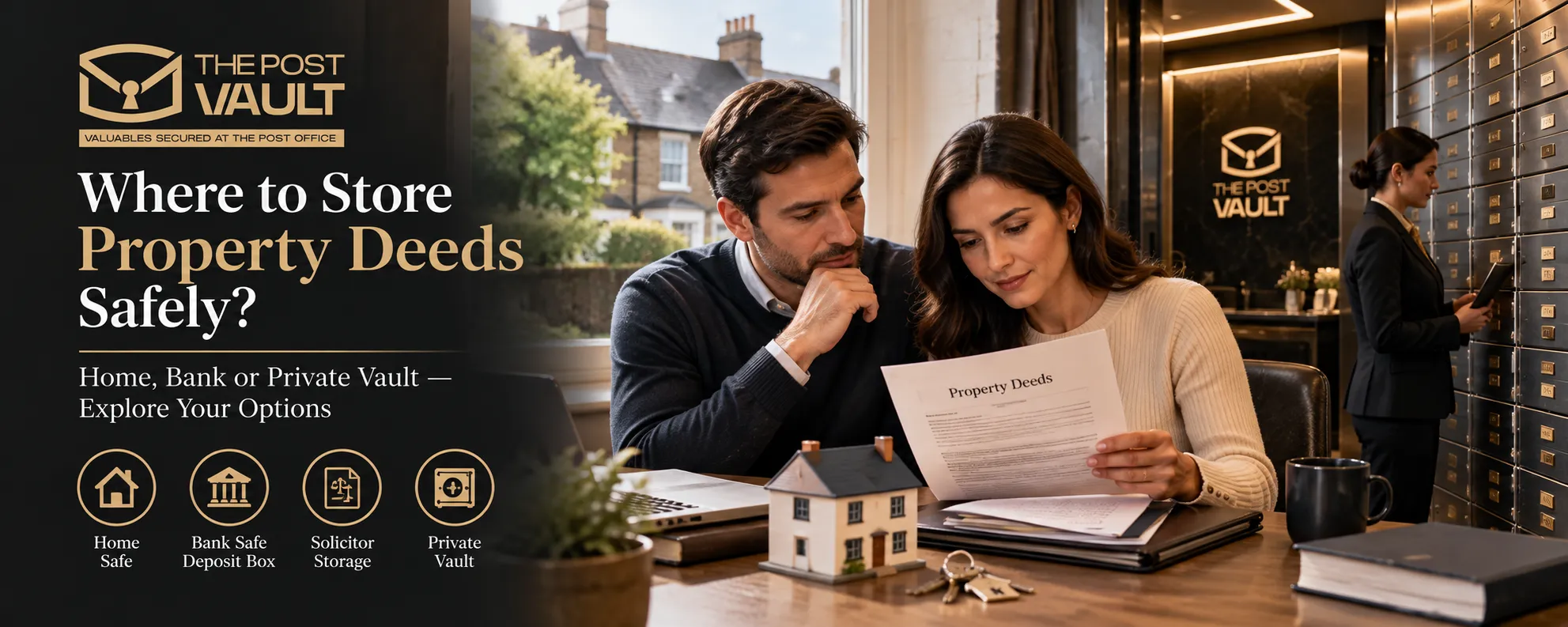
Once you have your property deeds and related documents, the next step is deciding where to keep them. The ideal storage option should protect them from theft, damp, loss, and accidental damage while still allowing you to access them when necessary. Here are some of the main options to consider:
Choose a Private Vault
For homeowners looking for secure, dedicated off-site storage, a private vault can be a practical alternative. Private facilities offer safe deposit boxes, which are designed specifically for storing valuables and important documents in secure individual boxes.
A private vault can keep your property deeds away from everyday household risks while allowing you to retain control of the documents. This can be particularly useful if you have other important papers, such as wills, contracts, certificates or historic property documents, that you want to keep together.
When choosing a private vault, look at the security measures, access arrangements, privacy procedures, box sizes and terms before making a decision. A professionally managed facility can provide an additional layer of physical protection without requiring you to keep sensitive documents somewhere obvious at home.
For homeowners who rarely need their original deeds but want to keep them secure for the long term, The Post Vault offers a balance of security, privacy and controlled access.
Store Property Deeds at Home
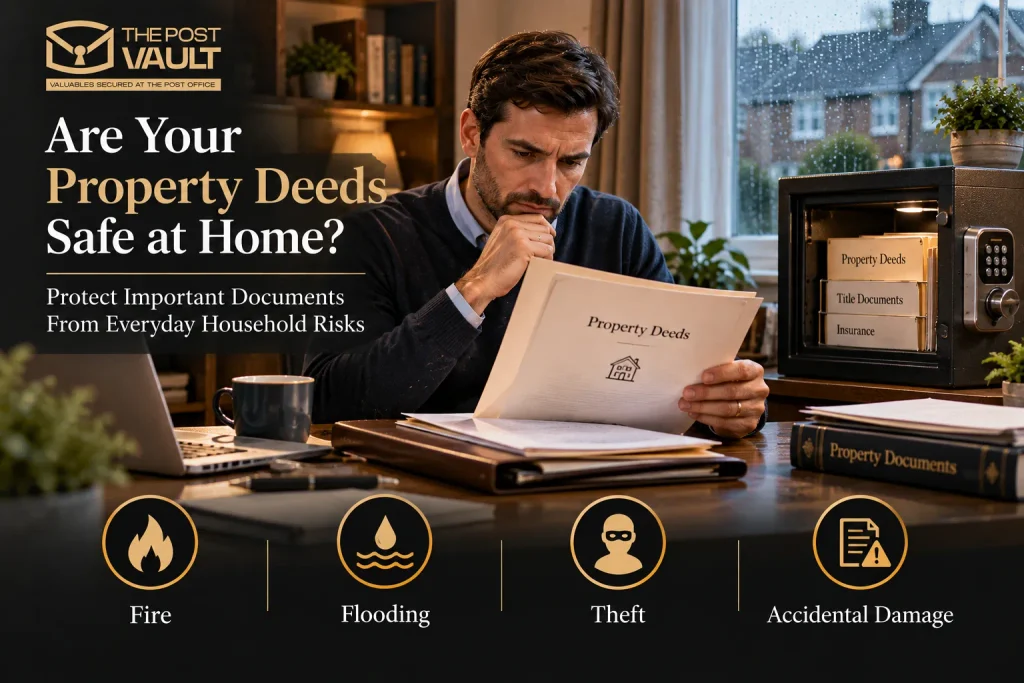
Keeping your deeds at home is convenient because you can access them whenever you need them. A good-quality, fire-resistant home safe can offer more protection than a filing cabinet or drawer.
However, there are risks of home safe storage. Fire, flooding, burglary, or accidental damage could put your paperwork at risk. If you choose this option, avoid lofts, garages and areas prone to damp or temperature changes.
Leave Them With a Solicitor
Some solicitors may offer document storage for clients, making this an option for homeowners who prefer professional custody of important paperwork. Your solicitor may already hold documents relating to your property, so keeping everything together can be convenient.
However, storage arrangements vary between firms, including access, fees, and how long documents are retained. It is worth checking the firm’s specific terms before relying on this option for long-term storage.
Use a Bank Safe Deposit Box
A bank safe deposit box can provide a secure location away from your home. It may be suitable for storing title deeds and other documents that you rarely need to access. The main consideration is convenience. Access is generally limited to the bank’s opening arrangements, and not every bank or branch offers safe deposit boxes. You should also check the provider’s terms regarding access, liability, and insurance.
Home vs Solicitor vs Bank vs Private Vault: Which is Better?

Choosing where to store property deeds depends on how often you need them, the level of protection you want, and the risks you are comfortable with. Here is a simple comparison:
| Storage Option | Security | Accessibility | Best Suited For |
|---|---|---|---|
| Home safe | Good, if the safe is properly installed and fire-resistant | High | Documents you may need regularly |
| Solicitor | Professional document storage may be available | Moderate | Clients who prefer their solicitor to hold important paperwork |
| Bank safe deposit box | High | Moderate, depending on opening arrangements | Documents rarely needed |
| Private vault | High, with controlled access and dedicated security | Good, subject to provider arrangements | Valuable or irreplaceable documents requiring long-term protection |
Why Choose a Private Vault for Property Deeds?
A private vault’s safe deposit boxes for documents can be particularly appealing if you want to keep important property documents away from your home while retaining control over them. Unlike storing deeds in a drawer, filing cabinet or loft, a private safe deposit box provides a dedicated space designed for valuables and important documents.
For homeowners who rarely need to access their original deeds, this can offer a practical combination of security, privacy and controlled access. You can also keep related documents, such as historic conveyances, certificates and other important paperwork, safely together.
Do You Still Need Your Original Property Deeds?
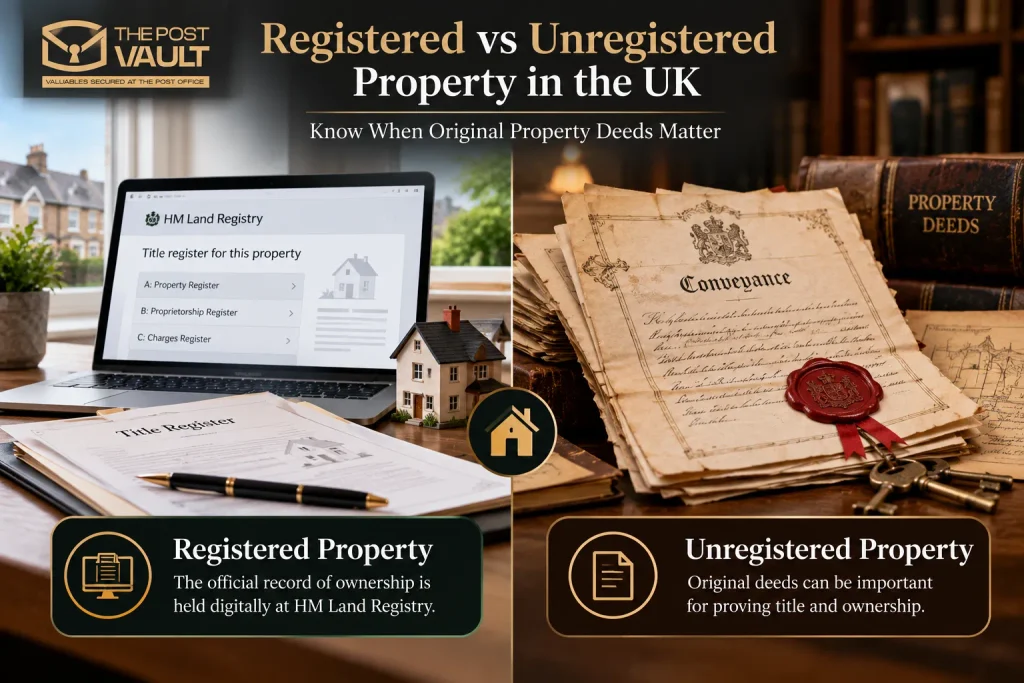
In England and Wales, you generally do not need the original paper deeds to prove ownership if your property is registered with HM Land Registry.
For Registered Property
HM Land Registry holds the official digital record of land and property ownership in England and Wales. If your property is registered, you don’t need the paper deeds to confirm ownership or to sell. HM Land Registry also doesn’t store original paper deeds. At first registration, it scans the relevant documents and returns the originals to whoever sent them. If you bought a home that was already registered, the seller had no obligation to hand any old paper deeds over.
For Unregistered Property
A smaller number of properties have never been registered. Selling, giving away, or mortgaging one triggers registration, and for that you’ll need the original deeds to prove title. Since December 1990, any sale has had to be registered, so unregistered homes are mostly those that haven’t changed hands since. If you’ve owned yours for decades, check which category it falls into.
How to Tell Registered vs Unregistered Property?
In England and Wales, the easiest way to check whether a property is registered is through HM Land Registry. You can search for the property online using its address or location. If it is registered, you should be able to find a title register, which includes details such as the title number, registered owner, tenure and certain rights or restrictions affecting the property.
If the property does not appear in a normal search, this does not automatically mean it is unregistered. If you believe a property may be unregistered and the original deeds are missing, consider getting advice from a conveyancer or solicitor before taking further steps. The address may be recorded differently, or the property may have changed since registration. In such cases, you can request an Index Map search from HM Land Registry, which can confirm whether the land is registered and identify any relevant title number.
What Documents Are Best Stored in a Safe Deposit Box?
When deciding what documents to keep in a safe deposit box, think about the paperwork that is important, difficult to replace, or not needed every day. A secure box can be particularly useful for protecting original documents from theft, fire, damp, and accidental damage. Depending on your circumstances, you might consider storing:
- Property Deeds and Title Documents: Original paperwork relating to your home or other property.
- Wills: Important legal documents that need to be kept safe and in good condition.
- Certificates: Birth, marriage, adoption, and other important certificates that can be difficult to replace.
- Financial Records: Selected investment, bond, and other financial documents that you do not need regular access to.
- Business Paperwork: Important contracts, agreements, and ownership documents.
- Insurance Documents: Original policies or supporting paperwork that you want to keep securely.
- Family Records and Keepsakes: Historic letters, photographs, and other documents with sentimental value.
- Certificates of Authenticity: Supporting paperwork for valuable collectibles, jewellery, artwork or other possessions.
How Can The Post Vault Help You?
Your property deeds may not be documents you need every day, but they are still important papers worth protecting for years to come. Keeping them at home can expose them to risks such as theft, fire, damp, or accidental loss. The Post Vault provides private safe deposit boxes where you can securely store property deeds and other important documents away from everyday household risks.
If you are considering things to store in a safe deposit box, original deeds, certificates, historic property documents, and other valuable paperwork can all be worth keeping in a secure, dedicated space. With controlled access and privacy-focused procedures, we give homeowners, landlords and businesses a practical storage option while keeping their belongings under their control.
Conclusion
Your property deeds may spend most of their time tucked away, but their importance should never be overlooked. Knowing where to store property deeds can help you protect documents that may be difficult or impossible to replace. For a secure off-site option, The Post Vault offers private safe deposit boxes for property deeds and other important documents. Ready to give your valuable paperwork a safer home? Explore The Post Vault and choose a secure place for the documents that matter most.
Frequently Asked Questions
Where is the safest place to store property deeds?
A private safe deposit box can be a secure off-site option for storing property deeds. It keeps important documents away from common household risks such as theft, fire, damp, and accidental damage.
Should I keep my property deeds at home?
You can keep property deeds at home, ideally in a good-quality, fire-resistant safe. However, off-site storage may provide an additional layer of protection if you want to reduce the risks associated with keeping valuable documents at home.
Do I still need the original property deeds in the UK?
If your property is registered with HM Land Registry, the official register is generally used to confirm ownership. However, original deeds may still contain useful historical, boundary, or other information, so keeping them safely can still be worthwhile.
What is the difference between property deeds and other property documents?
Property deeds are legal documents that can provide evidence about the ownership or history of a property. Other property documents may include title registers, conveyances, mortgage paperwork, plans, guarantees and certificates. While registered ownership is recorded by HM Land Registry, older property deeds can still contain useful information.
What should I do if I have lost property deeds?
If you have lost property deeds, the first step is to check whether your property is registered with HM Land Registry. For registered properties, you can obtain official copies of the title register and other filed documents where available. If the property is unregistered, losing the original deeds can be more complicated, so you should speak to a conveyancer or solicitor for advice.
Where should house deeds be kept?
House deeds should be kept somewhere secure, dry and protected from theft or accidental damage. You could use a fire-resistant home safe, solicitor document storage or a private safe deposit box.