
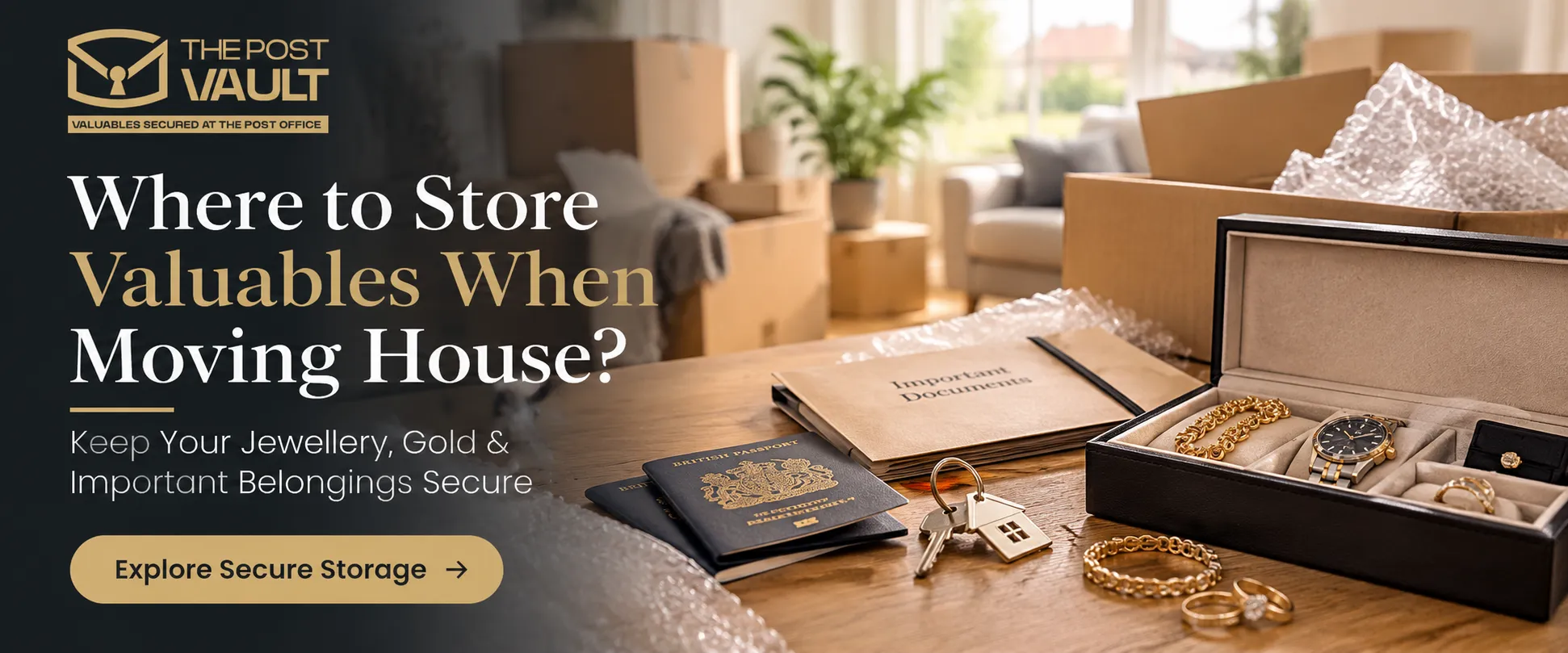
Moving house involves more than packing furniture and arranging transport. Jewellery, gold, important documents, luxury watches, and family heirlooms can be particularly vulnerable to loss, theft, or accidental damage while belongings are being packed, transported, and unpacked.
So, where should you store valuables when moving house? For small, high-value belongings that you won’t need immediately, a private safe deposit box can provide secure off-site storage. Essential documents and everyday items may be better kept with you, while larger possessions can be placed in a suitable self-storage facility.
Whether you’re moving within Lancashire or relocating elsewhere in North West England, planning secure storage during moving home can help protect your most important possessions throughout the process. Here’s how to compare your options and decide what to store before, during, and after your move.
What Are the Safest Storage Options When Moving House?
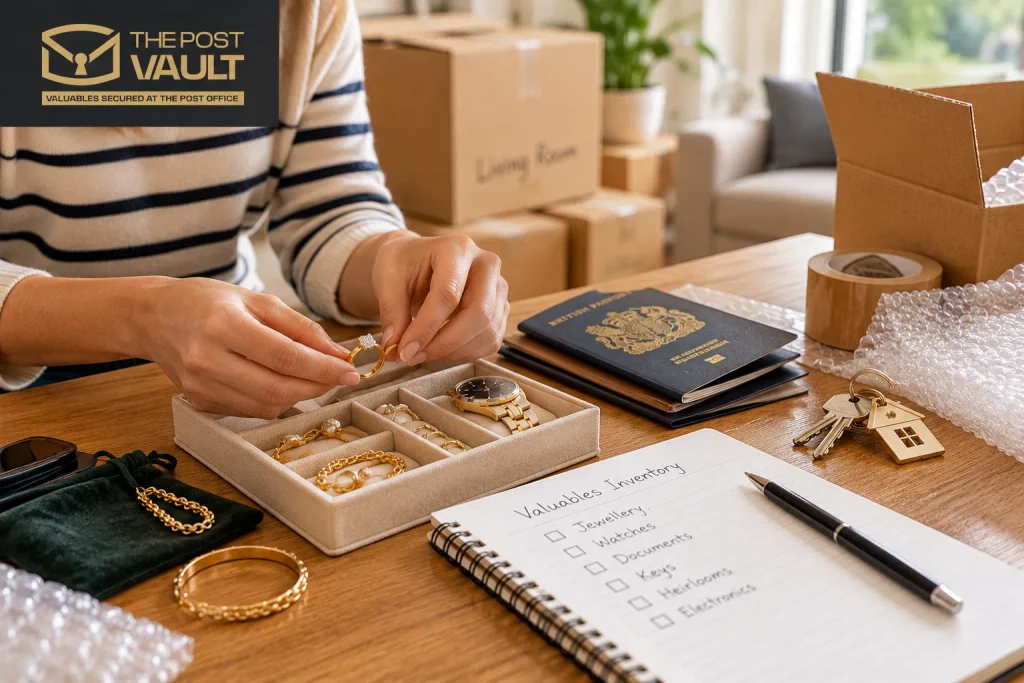
A house move can temporarily disrupt your normal security arrangements. Removal teams, contractors, and other visitors may need access to your property, while valuable belongings are moved between rooms, vehicles, and locations.
Choosing where to store valuables depends on their size, value, importance, and how frequently you need access. Some items may be suitable for a home safe, while others are better kept in a dedicated secure facility until your move is complete.
Private Safe Deposit Boxes
Private vaults and safe deposit boxes are particularly suitable for compact, high-value possessions that don’t need to travel with your household belongings.
Rather than keeping expensive jewellery or important documents among removal boxes, you can place permitted items in a professionally managed facility before moving day and retrieve them when needed.
At The Post Vault, we provide private safe deposit storage with security measures such as controlled entry, CCTV surveillance, and monitored access. Our facilities offer an alternative to leaving valuable possessions in a property where packing, removal work, or renovation is taking place.
Private safe deposit boxes can be suitable for:
- Jewellery and luxury watches
- Gold coins, bars, and other permitted precious-metal items
- Important documents and certificates
- Family heirlooms and sentimental possessions
- Small collectibles and other high-value belongings
A private vault can be especially useful when you’re moving between properties, staying in temporary accommodation, or waiting for your new home to be ready.
Home Safes
A professionally installed home safe can be convenient for belongings you need to access regularly. Depending on its size and security rating, it may accommodate jewellery, passports, important paperwork, and smaller valuables.
However, a home safe remains inside the property. During a move, this may be less convenient if removal workers are coming and going, the property is undergoing renovations, or you need to leave before your new home is available.
If you intend to move a heavy safe, consider how it will be transported and installed at the new property. Some safes require specialist handling because of their weight or fixing arrangements.
Bank Safe Deposit Boxes
Banks have traditionally provided safe deposit boxes for documents, jewellery, and other valuables. However, availability varies between banks and individual branches, and not every institution offers this service.
Bank branch closures and changes to physical banking services may also affect the options available locally.
If you’re considering a bank safe deposit box, check availability, access hours, rental terms, and the security arrangements at the specific branch.
For customers who cannot find a suitable banking option, a dedicated private vault such as The Post Vault may offer an alternative for secure storage during a house move.
Secure Self-Storage Units
Self-storage facilities are generally more suitable for furniture, appliances, moving boxes, and other bulky belongings.
They can be useful when your new property isn’t ready or when you’re downsizing and need additional space.
However, general self-storage units aren’t necessarily designed for compact, high-value items such as gold, jewellery, or irreplaceable documents. Security arrangements also vary between facilities.
For these possessions, a private safe deposit box may be a more appropriate option, while self-storage can accommodate the larger items involved in your move.
Trusted Family Members
Leaving valuables with a trusted family member or friend can be convenient for a short period, particularly if you need somewhere temporary to keep a small number of belongings.
However, the security arrangements depend on the property and how the items are stored. Informal arrangements may also create uncertainty about responsibility if something is lost or damaged.
For expensive or irreplaceable possessions, a dedicated secure storage facility may provide a more structured alternative.
Which Storage Option Is Right for Your Valuables?
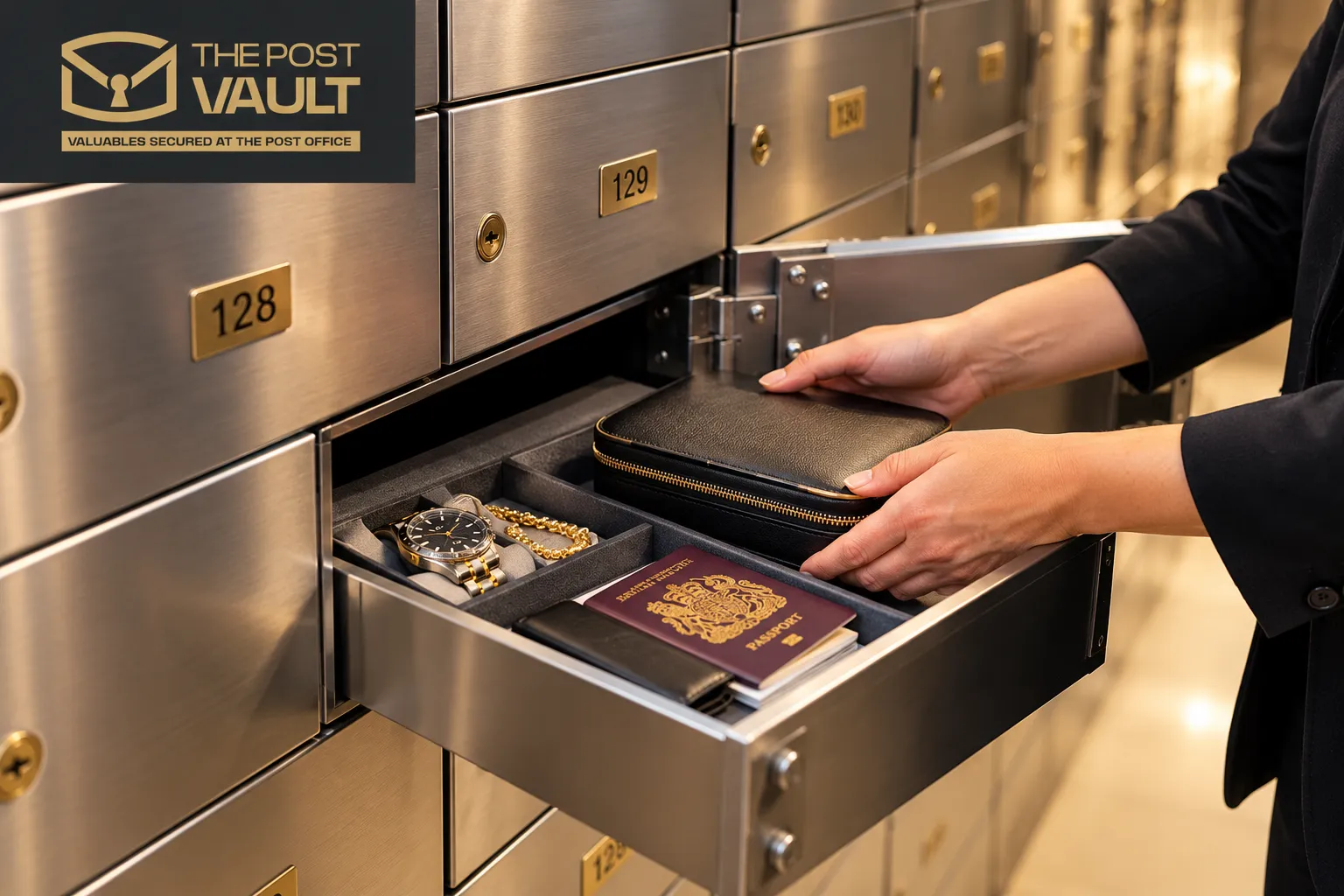
Different storage options serve different purposes. The best choice depends on what you’re storing, how frequently you need access, and how long the belongings will remain away from your new home.
| Storage Option | Best For | Main Advantage | Main Limitation |
|---|---|---|---|
| Private safe deposit box | Jewellery, gold, watches, documents, and small valuables | Dedicated off-site security and controlled access | Rental fees and provider access hours |
| Home safe | Valuables requiring frequent access | Convenient access at home | Remains within the property during the move |
| Bank safe deposit box | Documents and compact valuables | Secure storage where available | Branch availability and access restrictions |
| Self-storage unit | Furniture, appliances, and larger possessions | More space for household belongings | May not provide specialist protection for valuables |
| Trusted family member | Temporary storage of selected belongings | Convenient and potentially inexpensive | Security depends on individual arrangements |
For small, high-value belongings that you won’t need during the move, private safe deposit storage offers a practical way to keep them separate from furniture, removal boxes, and general household activity.
How to Protect Jewellery, Gold and Important Documents During a Move
Knowing how to keep valuables safe when moving house starts with identifying which belongings need additional care.
Small valuable items can be misplaced among packing materials, while fragile or sentimental possessions may be damaged during transportation.
Separating these belongings before packing begins can help reduce unnecessary risks.
Jewellery and Luxury Watches
If you’re wondering where to store jewellery when moving house, avoid placing expensive pieces loosely inside ordinary removal boxes.
Rings, necklaces, bracelets, and watches can become tangled, scratched, or misplaced when packed alongside clothing and other household items.
Before moving:
- Photograph valuable jewellery and record important details.
- Place individual pieces in suitable protective packaging.
- Keep valuable watches in their cases where appropriate.
- Separate jewellery from general household packing.
- Consider secure off-site storage for pieces you won’t need immediately.
Using safe deposit boxes for jewellery can help keep valuable collections away from the disruption of moving day.
Gold and Other Precious Items
Gold requires particular care because significant value can be concentrated in relatively small items.
Coins, bars, and other precious-metal possessions should not be mixed with ordinary household belongings or left in easily accessible removal boxes.
When storing gold during a house move, consider keeping an inventory that records the type, quantity, weight, and identifying details of each item.
For gold that doesn’t need to accompany you, safe deposit boxes for gold can provide an alternative to transporting it alongside furniture or keeping it in a temporarily unsettled property.
Property Documents and Family Records
Important documents can be difficult or expensive to replace, making them a priority during a house move.
These may include property deeds, certificates, wills, family records, passports, and other essential paperwork.
However, not every document should be placed into off-site storage before moving.
Keep passports, identification, keys, and any original paperwork required for property completion or solicitor appointments readily accessible.
Documents that aren’t needed immediately may be suitable for safe deposit boxes for documents, provided they comply with the facility’s storage terms.
Organise paperwork into clearly labelled folders and consider keeping secure digital copies of important records where appropriate.
Family Heirlooms and Collectibles
Family heirlooms often hold sentimental value that cannot be measured financially.
Inherited jewellery, antique watches, small collectibles, and historical family possessions may be irreplaceable. Packing them with ordinary household items can expose them to unnecessary handling and accidental damage.
For compact heirlooms that fit within the available box dimensions, a private safe deposit box can provide additional physical security during the move.
Fragile or unusually shaped items should be assessed carefully to determine whether the available storage conditions and packaging are suitable.
When Should You Move Valuables into Secure Storage?
Timing is an important part of protecting valuable possessions during a house move.
Arranging storage before moving day can help prevent last-minute decisions when removal workers arrive and household belongings are being transported.
Before Packing Begins
Identify your valuable and irreplaceable possessions.
Prepare an inventory, take photographs, and decide which items should remain with you, which can travel with the removal company, and which would be better placed in secure off-site storage.
If you’re considering a safe deposit box, check the available sizes, rental periods, and access arrangements in advance.
A Few Days Before Moving Day
Separate valuables that shouldn’t travel with your general household belongings.
Deposit jewellery, gold, watches, and other permitted items that you won’t need during the move into your chosen secure storage facility.
Keep essential documents, keys, and belongings required for immediate use in a separate, easily accessible place.
On Moving Day
Keep passports, identification, keys, completion paperwork, medication, and other essential belongings with you.
Avoid placing valuable items into boxes that could be confused with general household packing.
If you’re transporting any valuables personally, use appropriate protective packaging and keep them under your supervision.
After Moving Into Your New Home
Once your belongings have arrived and your new home is organised, review your inventory to ensure everything is accounted for.
Decide which items should return home and which may benefit from longer-term secure storage.
If you’re planning to install a home safe, consider whether the new property has a suitable location and whether professional installation is required.
Where Should You Store Valuables Between Moving Out and Moving In?
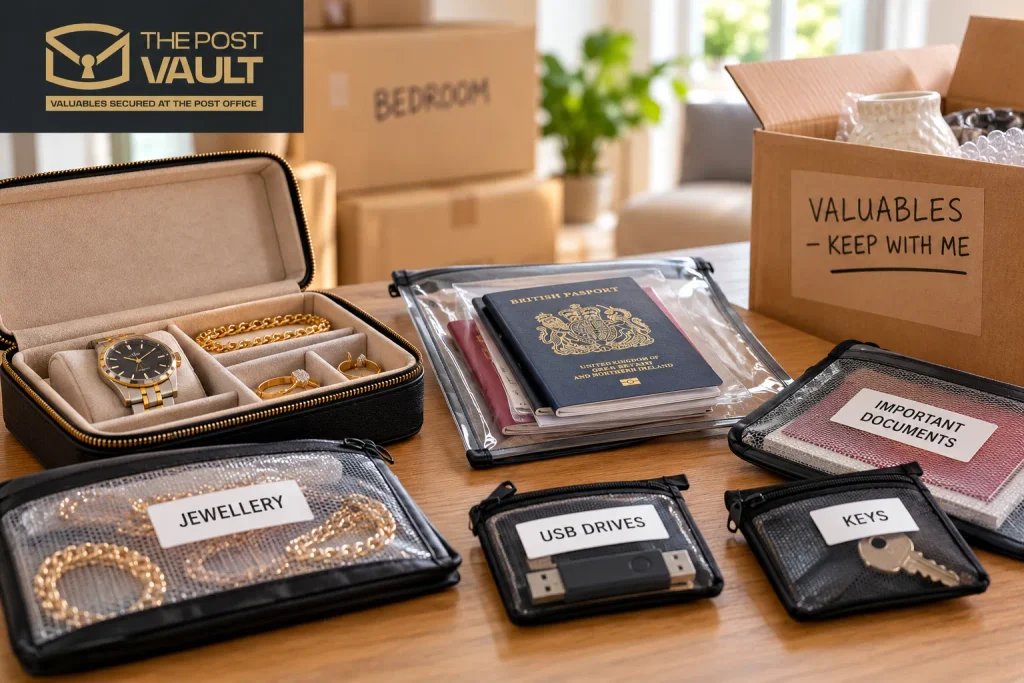
Not every house move happens on a single day.
Property-chain delays, renovation work, temporary accommodation, or differences between moving-out and moving-in dates can leave you without a permanent place to keep valuable belongings.
During these periods, secure temporary storage can be particularly useful.
When Property Completion Is Delayed
If the purchase of your new home is delayed, you may need to keep belongings in storage longer than expected.
While furniture and larger items can remain in a self-storage facility, compact valuables such as jewellery, gold, and heirlooms may be better suited to a private safe deposit box.
Check the rental period and renewal conditions before arranging storage, especially if your moving dates are uncertain.
When Staying in Temporary Accommodation
Hotels, serviced apartments, and short-term rental properties may not offer the storage arrangements you would normally have at home.
Rather than moving valuable jewellery or family possessions between temporary addresses, you could keep items you won’t need in secure off-site storage until you settle into your new property.
When Your New Home Is Being Renovated
Renovation work can involve contractors, deliveries, dust, and frequent movement throughout the property.
Keeping valuable belongings away from the work area can reduce their exposure to accidental damage or misplacement.
A private safe deposit box can provide a temporary location for compact valuables until the property is ready.
How Quickly Will You Need Access to Your Valuables?
Before choosing secure storage, consider how often you’ll need to retrieve your belongings.
An item that must be accessed daily requires a different storage arrangement from jewellery or family heirlooms that may remain untouched for several months.
- For immediate access: Keep essential documents, keys, medication, and regularly used belongings with you.
- For occasional access: Consider a nearby secure facility with opening hours that suit your needs.
- For temporary storage: Compare rental periods and check what happens if your move takes longer than expected.
- For longer-term storage: Consider box dimensions, ongoing costs, and how frequently you expect to visit.
The Post Vault offers local safe deposit storage in Bolton, Chorley, and Preston, making it a practical option for customers in these areas who want to keep valuable belongings within reasonable travelling distance.
Always check the relevant branch’s access arrangements before renting.
How to Arrange a Safe Deposit Box Before Moving House
If you’ve decided to use private secure storage, arranging a safe deposit box before moving day can make the process easier.
1. Choose a Suitable Facility
Start by comparing providers based on location, security measures, access arrangements, and customer service.
If you’re considering how to choose a safe deposit box, look beyond the advertised rental price and check the facility’s security procedures and terms.
2. Select the Right Box Size
Consider the dimensions and quantity of the belongings you intend to store.
Jewellery, watches, gold, documents, and small heirlooms may require different amounts of space, particularly when protective packaging is included.
Choose a box that accommodates your belongings without paying for unnecessary space.
3. Check Rental Periods and Access Arrangements
Moving dates can change, so choose a rental period that suits your expected storage requirements.
The Post Vault offers different rental options, including three-month periods, subject to current availability and terms.
Before renting, check the total cost, renewal conditions, and how often you can access your box.
4. Complete Customer Verification
Safe deposit box providers generally require customers to complete identification and registration checks before opening an account.
Confirm which documents you need and whether an appointment is required.
Completing these steps before moving day can help you avoid unnecessary delays.
5. Deposit Your Valuables Before the Move
Once your account is ready, place your permitted belongings inside the box.
Keep an inventory of stored items and retain important records separately.
When your move is complete, you can retrieve your possessions according to the facility’s access arrangements or continue using the box for longer-term storage.
How Can The Post Vault Help You During a House Move?
Moving house already involves enough decisions without having to worry about where your most valuable possessions are kept.
At The Post Vault, we provide private safe deposit storage for customers who want to keep jewellery, gold, important documents, watches, and other permitted belongings away from the disruption of moving home.
Our facilities offer controlled access and security measures designed to help protect stored possessions. With different box sizes and rental periods available, customers can choose an option based on what they need to store and how long they expect to use the service.
The Post Vault provides convenient local options for customers looking for:
Whether you’re preparing for moving day, staying in temporary accommodation, or waiting for renovations to finish, secure off-site storage can help keep valuable belongings separate from the moving process.
Secure Your Valuables Before Moving Day
Don’t wait until removal boxes are being packed to decide where your jewellery, gold, and important possessions should go.
Explore The Post Vault’s available box sizes, compare rental options, and arrange suitable storage before your move.
Conclusion
Moving house can temporarily expose valuable possessions to risks that aren’t part of everyday life. Jewellery, gold, important documents, and sentimental belongings deserve careful planning rather than being placed among ordinary removal boxes.
The right storage option depends on what you’re protecting, how long you need storage, and how quickly you’ll need access. Home safes, self-storage facilities, and bank safe deposit boxes may suit different circumstances, while private vaults offer a practical option for compact valuables that don’t need to remain at home.
For customers moving within Bolton, Chorley, Preston, and surrounding areas, The Post Vault provides private safe deposit storage to help keep valuable belongings away from the disruption of a house move.
By arranging storage before moving day, you can focus on settling into your new home while knowing you’ve taken practical steps to protect what matters most.
Frequently Asked Questions
Where is the safest place to store valuables when moving house?
The safest option depends on the type of item, its value, and how frequently you’ll need access. Private safe deposit boxes are suitable for compact, high-value belongings such as jewellery, gold, and family heirlooms. Essential documents should remain accessible, while larger household possessions may be better suited to self-storage facilities.
How can I keep valuables secure during a house move?
Create an inventory, photograph important possessions, and separate valuable items from ordinary removal boxes. Keep essential belongings with you and consider secure off-site storage for jewellery, gold, and other valuables you won’t need during the move.
Is it safe to store gold during a house move?
Gold should be handled carefully because substantial value can be concentrated in small items. Avoid placing it in ordinary removal boxes. A private safe deposit box can provide additional physical security for permitted gold items while your household belongings are being transported.
Can I rent a safe deposit box for a short-term house move?
Yes. Some private safe deposit providers offer shorter rental periods. The Post Vault offers three-month rental options, subject to current terms and availability, which may suit customers who need temporary storage during a house move.
What should I do with valuables if my moving date is delayed?
If your move is delayed, consider keeping non-essential valuables in secure off-site storage until your new property is ready. Check the provider’s rental and renewal conditions so you understand your options if storage is required for longer than expected.
Should I leave jewellery with a removal company?
It’s generally advisable to keep expensive or irreplaceable jewellery separate from ordinary removal boxes. You may choose to transport it personally or place it in secure storage before moving day. Check the removal company’s policies if you intend to have it transport valuable possessions.
Where should I store important documents when moving house?
Keep passports, identification, keys, and paperwork needed for property completion with you. Documents that won’t be required immediately, such as certain family records or certificates, may be suitable for secure off-site storage. Always check the provider’s permitted-item rules.
Can I store family heirlooms in a safe deposit box?
Many compact heirlooms, including inherited jewellery, watches, and small collectibles, may be suitable for safe deposit storage. Check the box dimensions, packaging requirements, storage conditions, and permitted-item policy before depositing anything.