
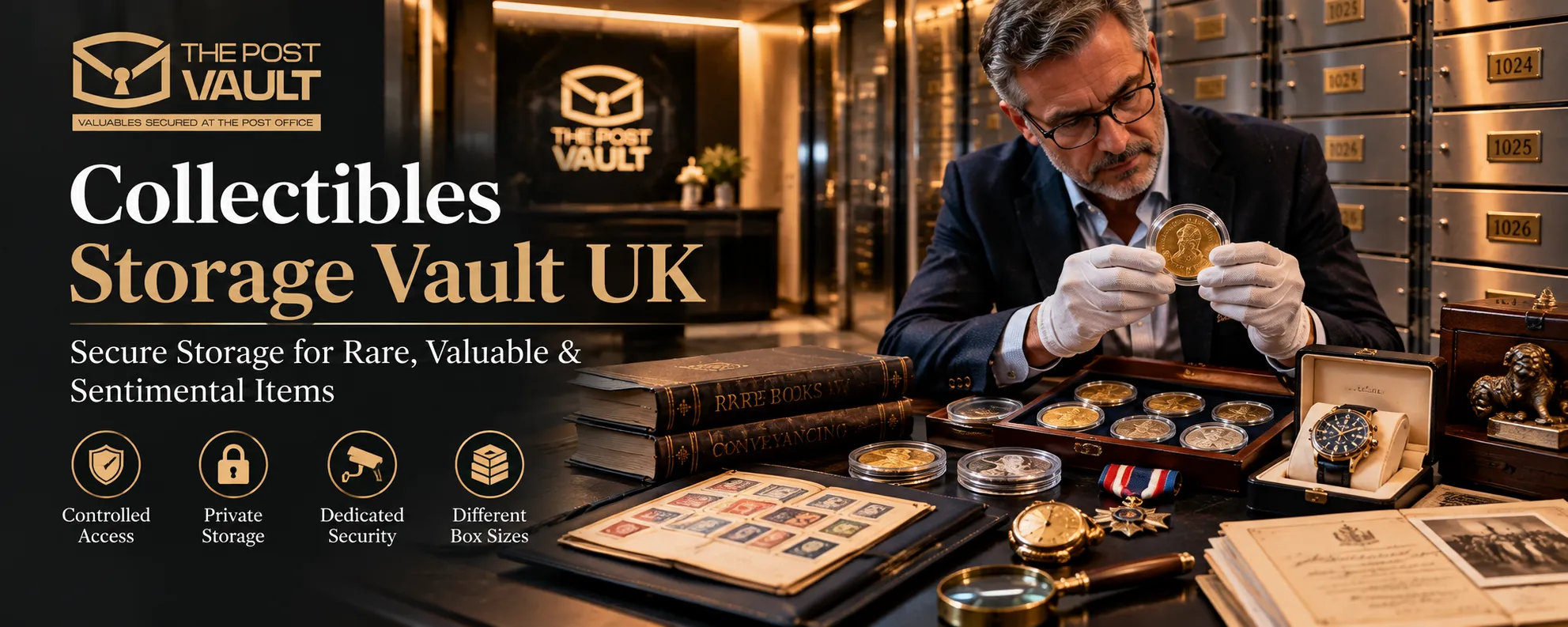
Some collectibles are worth a fortune. Others are worth far more than they would ever fetch at auction. A coin from your grandfather’s pocket, a watch you saved two years to buy, a signed first edition you tracked down after a decade of searching: none of these can simply be replaced. So, how should you store valuable collectibles?
Collectibles are rarely just objects. They hold the hours of searching, the thrill of the find, and the memories attached to them. Yet most of us keep them in a drawer, on a shelf, or in a cupboard, and hope nothing goes wrong. This guide covers the best way to store collectibles, from preparing each piece to choosing private storage for collectibles away from home.
How to Store Valuable Collectibles?
Knowing how to store valuable collectibles starts with two things, preparing each piece properly and choosing a safe place for it to stay. Collectibles are often sensitive to moisture, friction, and handling, so a few simple steps before storage can protect their condition and value for years. Once properly prepared, high-value or irreplaceable pieces may also benefit from secure off-site storage that reduces their exposure to theft and everyday household risks
Cleaning and Handling
Handle each piece with clean, dry hands or appropriate gloves where appropriate, because skin oils and moisture can mark metal, paper, card, and delicate finishes. Avoid strong cleaning products or polishing rare items yourself, as cleaning can reduce the value of coins, antiques, and vintage pieces. If you are unsure, follow expert guidance or consult a specialist.
Protect Items From Moisture and Unstable Conditions
Make sure items are not damp when packed, and avoid storage conditions where moisture or condensation can develop. Paper, metals, textiles and other materials can respond differently to humidity, so valuable or fragile collections may require material-specific preservation advice.
Storing Each Piece Separately
Putting everything into one box is one of the easiest ways to cause damage. Use individual pouches, sleeves, cases, or acid-free materials suited to each item, so that everything sits securely without rubbing or crushing. Use protective materials designed for the specific collectible. Depending on the item, this may include archival-quality sleeves, acid-free folders, individual holders, fitted cases, or other conservation-safe packaging. Avoid ordinary household packaging that could trap moisture, transfer chemicals, or place pressure on the item.
Keeping a Record
Photograph each item and keep a list with descriptions, condition notes, and paperwork such as receipts, certificates or valuations. A clear record helps you stay organised and prove ownership if you ever need to.
Can You Store Collectibles in a Safe Deposit Box?
Many people use safe deposit boxes for exactly this purpose. But what is a safe deposit box? It is a secured individual compartment where valuables such as collectibles, documents, and keepsakes can be stored away from everyday risks. Always check the provider’s terms to confirm that the specific item is permitted and suitable for the available box size and storage conditions
A private facility like The Post Vault is designed with controlled access and multiple security measures to help protect your possessions from unauthorised access. This can be a practical option for collections that are:
- High in monetary value
- Rarely handled or displayed
- Emotionally significant
- Difficult or impossible to replace
- Too valuable to keep casually at home
How to Store Different Types of Collectibles Safely?
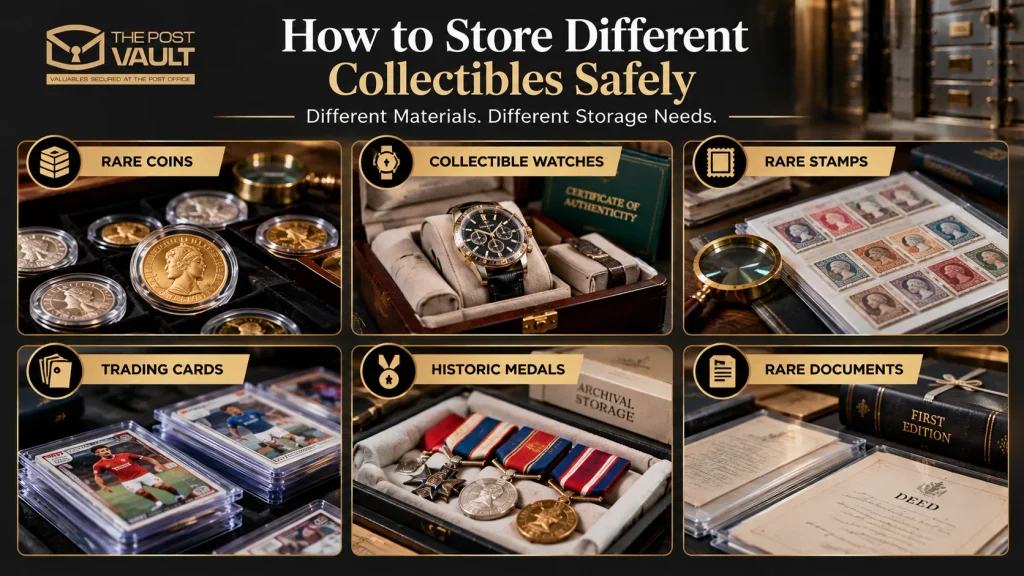
Different collectibles have different storage needs depending on their material, age, and condition. Here are some simple storage tips for different types of collectibles.
Also Read: What Security Features Should a Safe Deposit Box Have?
How to Store Rare Coins Safely?
Handle coins carefully by their outer edges, keeping your fingers away from the front and back surfaces to help prevent marks, oils, and fingerprints. Keep each coin in its own holder or soft pouch so they cannot knock against each other, and never clean or polish them, as this can reduce their value.
How to Store Collectible Watches?
Make sure the watch is clean and dry, and store it in its own pouch or case so the crystal, case, and strap are protected. Keep any box, papers, and service records together with it, since they add to its history and value.
How to Store Stamps Safely?
Handle stamps with tongs rather than fingers, and keep them flat in suitable albums, sleeves, or acid-free materials. Avoid damp, direct light, and anything that could bend or crease them.
How to Store Trading Cards Safely?
Place cards in protective sleeves or rigid holders, and avoid stacking them under heavy items. Bent corners and creases can quickly affect condition, so keep them upright or flat with even support.
How to Store Medals and Historic Items?
Wrap each medal separately in soft, acid-free material so ribbons and metal do not rub together. Keep any paperwork, certificates, or letters that tell the item’s story alongside it.
How to Store Valuable Memorabilia?
For signed items, limited editions, and other memorabilia, use a protective case or soft wrapping and avoid placing anything heavy on top. Keep any certificates of authenticity with the piece, and protect it from moisture, light, and pressure.
How to Store Collectible Documents?
Store documents flat in acid-free folders or sleeves, away from moisture and light. Avoid folding, stapling, or using adhesive tape, and keep related paperwork together so each document’s history stays intact.
Which Rare Collectibles Should You Store in a Vault?
Not every item in your collection needs off-site storage for valuables, but some are strong candidates. A collectibles storage vault suits rare collectibles that are valuable, hard to replace, or emotionally important. Value is not only about price. If an item would be difficult or impossible to replace, or you rarely handle it, it may belong in a vault rather than on a shelf at home. Different things to store in a safe deposit box include:
- Rare coins and collectible banknotes
- Gold, silver or other permitted bullion
- Vintage and luxury watches
- Stamps and philatelic collections
- Trading cards, comics and rare books
- Medals, military and historic items
- Signed memorabilia and limited editions
- Collectible documents, certificates and letters
- Sentimental keepsakes such as heirlooms and photographs
What Are the Risks of Storing Collectibles at Home?
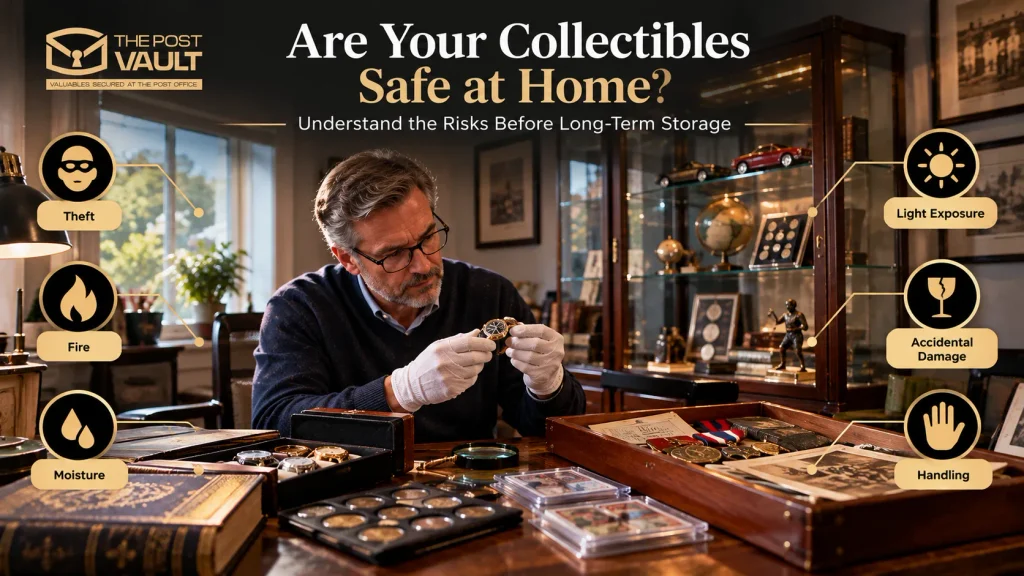
Home storage is convenient for items you display or handle often. However, the risks of storing collectibles at home are real. Theft, fire, flooding, accidental damage, and simple loss can all affect pieces kept in drawers, cabinets, or loft boxes. For a few everyday items, this may be manageable. For rare pieces, large collections, or irreplaceable keepsakes, an additional layer of protection makes sense.
Rare, fragile, or high-value collectibles may need more careful storage because condition can significantly affect their financial, historical, or sentimental value. Many collectors also find that keeping a valuable collection at home creates worry. Off-site storage for valuables removes that pressure by placing your items away from the property.
How to Protect Collectibles from Theft?
To protect collectibles from theft, you need to reduce how easy they are to reach. Items kept at home can be targeted, whereas a vault with controlled access limits who can get near them. Keeping selected high-value pieces in secure off-site storage removes them from household burglary risks and reduces the amount of valuable property kept at home.
It also helps to keep a clear record of what you own and to be discreet about the value and location of your collection.
How to Prevent Damage to Collectibles?
Knowing how to prevent damage to collectibles matters just as much, because condition often decides value. Everyday factors can gradually affect appearance and longevity:
- Moisture: Humidity can cause tarnishing, warping and discolouration.
- Friction: Repeated rubbing can scratch metal, wear finishes and damage surfaces.
- Light: Prolonged exposure can fade paper, ink, fabric and card.
- Pressure: Heavy items placed on top of fragile ones can bend, crease or crush them.
- Handling: Frequent touching can leave marks and cause gradual wear.
- Dust: Dust can settle on delicate surfaces and in fine detail, especially when items are left exposed.
- Temperature: Extreme or fluctuating temperatures can affect certain papers, adhesives, plastics, leather, and other sensitive materials.
How Can You Rent a Safe Deposit Box for Your Collectibles?
If you are wondering how to rent a safe deposit box, follow these simple steps:
- Choose a reputable provider: Look for a provider with strong security measures and a good reputation.
- Check box sizes: Choose a box that offers enough space for your collectibles without overcrowding.
- Understand access arrangements: Check the provider’s opening hours and how often you can access your box.
- Review security measures: Ask about CCTV, alarms, secure entry systems, and other security features.
- Provide identification: You will usually need valid identification and personal details to complete the rental process.
- Discuss your storage needs: Let the provider know what type of collectibles you plan to store so you can choose the most suitable box.
- Complete the rental agreement: Review the terms, fees, and conditions before signing the agreement.
- Check dimensions, not just box size: rigid watch cases, coin boxes, or document folders may require more room than expected.
- Ask about storage conditions where relevant, especially if an item is environmentally sensitive.
How Can The Post Vault Help?
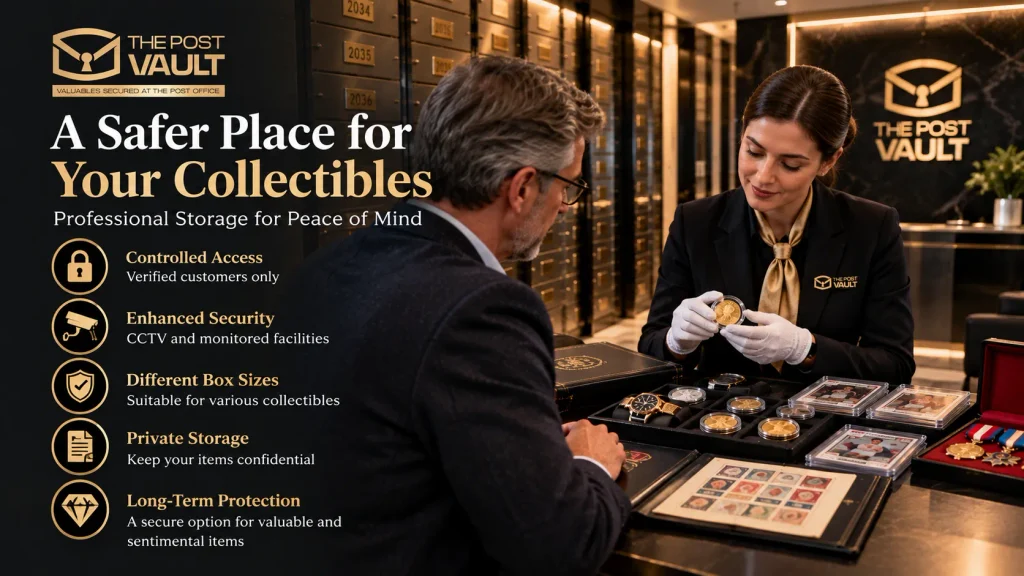
Some collectibles sit quietly in your home for years, but that does not mean they are safe there. A valuable watch can be stolen, an old document can be damaged by damp, and a rare coin can lose its condition simply through careless handling. The Post Vault gives your most important collectibles a secure place outside your home.
At The Post Vault, we provide private safe deposit boxes where important possessions can be stored away from everyday risks at home. With controlled access and privacy-focused procedures, we serve collectors across North West England through our safe deposit box locations in Bolton, Preston and Chorley. Whether you are storing rare coins or treasured family keepsakes, our private safe deposit boxes can help protect your items while keeping them under your ownership and control.
Conclusion
The best way to store a collectible depends on its material, condition, value and how often you need access to it. Appropriate protective packaging helps preserve the item itself, while secure off-site storage can reduce exposure to household theft and accidental loss. For particularly rare or sensitive pieces, specialist conservation and insurance advice may also be worth considering.
Frequently Asked Questions
What is the best way to store collectibles?
Clean your items gently, make sure they are completely dry, and place each piece in its own protective packaging. For valuable or irreplaceable items that you rarely handle, a private safe deposit box can provide an additional layer of physical security.
What is the difference between home storage and off-site storage for valuables?
Home storage is convenient for items you handle or display regularly, but valuable pieces remain exposed to risks such as theft, fire, and accidental damage. Off-site storage offers a more controlled environment, so the choice depends on how often you need access, the value of the items, and the level of security you want.
What is the difference between banks and private vaults?
Both may offer safe deposit boxes, but access arrangements, fees, security procedures, insurance or liability policies, and availability can differ. Review the specific terms each provider offers.
What are the biggest mistakes when storing collectibles?
Common mistakes include packing multiple items together, storing pieces while still damp, using unsuitable plastic packaging, stacking heavy items on fragile ones and not keeping a record of what is stored.
How can The Post Vault support long-term storage of collectibles?
The Post Vault provides private safe deposit boxes for valuables that may not be used frequently but need secure, dedicated storage. For collectors in North West England considering long-term storage for rare, valuable, or sentimental items, we offer controlled access and an added layer of physical protection.