

A piece of Indian jewellery can spend only a few hours on you but remain in your family for generations. So how to store Indian jewellery and Asian gold safely?
Indian jewellery and Asian gold often carry stories that go far beyond their monetary value. A bridal necklace may be connected to a wedding day, a pair of jhumkas may be a family gift, and a gold bangle may have been passed down through generations.
But beautiful jewellery needs protection when it is not being worn. From using individual pouches at home to choosing a safe deposit box for valuable pieces, the right storage method can help protect Indian jewellery and Asian gold for many years.
How to Store Indian Jewellery and Asian Gold Safely?
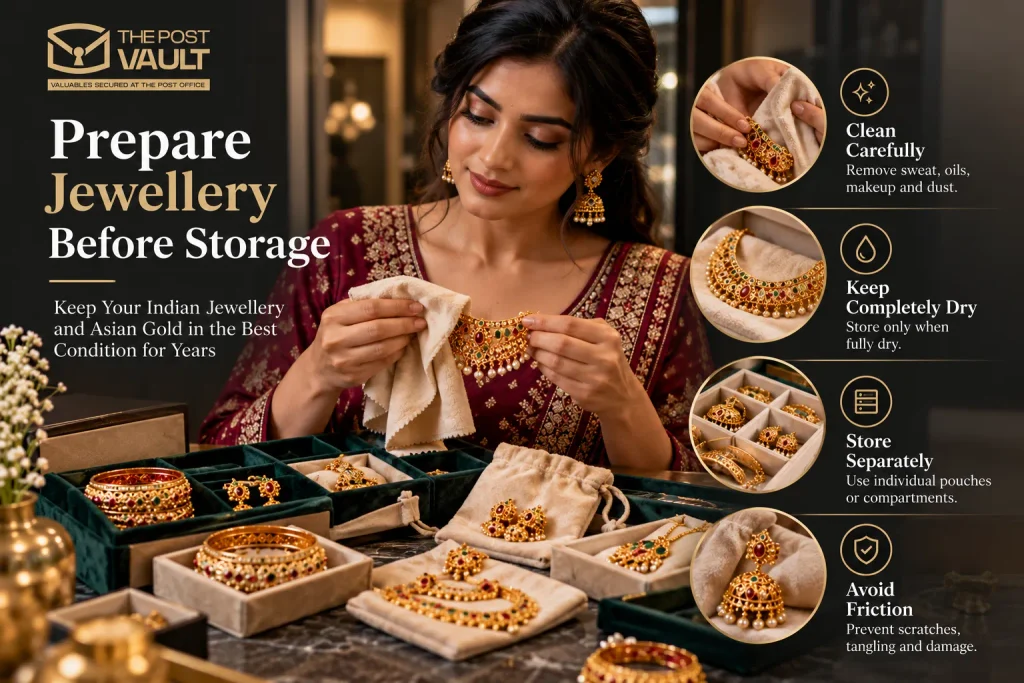
Different types of Indian jewellery and Asian gold can last for generations, but improper storage can still lead to scratches, tarnishing, fading, tangling, or damage to delicate details. Before putting your valuable pieces away, following the right preparations to store gold & jewellery can help protect their beauty, condition, and longevity. Follow these simple tips to keep your Indian and Asian jewellery looking its best for years to come.
Clean Jewellery Before Storing It
After wearing jewellery, gently wipe it with a soft, lint-free cloth. Sweat, skin oils, makeup, lotion, and dust can remain on the surface after wearing. Leaving these residues on jewellery for long periods may affect its appearance, particularly when the piece is stored in an enclosed space.
Make sure the jewellery is completely dry before putting it away. For delicate, antique, gemstone, or kundan jewellery, avoid experimenting with strong cleaning solutions. Follow the manufacturer’s care instructions or consult a professional jeweller when necessary.
Store Each Piece Separately
One of the easiest ways to damage jewellery is to put everything into one box. Chains can become tangled. Bangles can scratch one another. Earrings can catch on necklaces, while stone-studded pieces can rub against other jewellery. Use individual soft pouches and necklace holders for frequently worn pieces. Separate storage reduces friction and makes your collection easier to organize.
Give Gold Jewellery Its Own Space
Gold is valuable, but it can also be scratched by harder materials. Keep gold chains, rings, bangles, and earrings in separate compartments or soft pouches. Avoid placing heavy pieces on delicate jewellery. For Asian gold jewellery with detailed designs, Jewellery safe deposit boxes are especially useful because they reduce unnecessary rubbing and pressure.
Take Extra Care With Gold-Plated Jewellery
Gold-plated Indian jewellery requires extra care because its thin outer layer of gold can gradually wear away, making it more vulnerable to fading and discolouration. To reduce the impacts of tarnishing and preserve its shine, keep your jewellery away from excessive moisture, perfume, cosmetics, chlorine, harsh cleaning products, rough surfaces, and constant friction. Storing each piece separately in a soft, dry pouch or lined jewellery box can also help protect the plating and maintain its original appearance for longer.
Protect Jhumkas and Other Detailed Earrings
Jhumkas often contain intricate shapes, stones, beads, hooks, and decorative elements. Keep each pair together in a small compartment or pouch. Store the backs with the matching earrings so they do not get lost. Avoid placing heavy jewellery on top of large or delicate jhumkas because pressure can bend or damage their components.
Prevent Necklace Tangles
Long Indian necklaces and Asian gold chains can quickly become tangled when stored together. Close the clasp before putting a necklace away and give each chain its own space. Individual pouches, necklace compartments, or dedicated hooks can help prevent knots and unnecessary friction.
Where Should You Store Indian Jewellery and Asian Gold?
Once your jewellery is cleaned and organized, the next question is where to store Asian gold and Indian jewellery. There are three common options: at home, in a bank safe deposit box, or with a private safe deposit box provider. Each option serves a different purpose.
Private Safe Deposit Boxes
For people who want dedicated, secure storage outside the home, private safe deposit boxes are another option. But what is a safe deposit box, and why is it useful for storing valuable jewellery? A safe deposit box is a secured individual compartment where valuables such as Indian jewellery, Asian gold, and other possessions can be stored.
The procedure of storing Indian jewellery & gold in private vaults involves placing important things in a secure environment. A private safe deposit facility like The Post Vault is designed with controlled access and multiple security measures to help protect jewellery from unauthorised access and theft risk at home. This can be a practical option for jewellery collections that are:
- High in monetary value
- Rarely worn
- Emotionally significant
- Passed down through generations
- Too valuable to keep casually at home
These jewellery and gold safe deposit boxes can also provide an additional layer of physical security while allowing you to retain ownership and control of your jewellery. When evaluating a provider, don’t focus only on the appearance of the vault. Look at the actual security systems and operating procedures.
Storing Jewellery at Home
For jewellery that you wear regularly, home storage can be convenient. A quality jewellery box kept in a cool, dry and discreet location can work well for everyday pieces. Choose a box with individual compartments and a secure closure. However, there is a risk to home storage. The jewellery remains exposed to household risks such as theft, loss, accidental damage, fire, or other unexpected events. For a few everyday pieces, this may be manageable. For valuable bridal sets, large gold collections, or family heirlooms, you may want an additional layer of protection.
Bank Safe Deposit Boxes
A bank safe deposit box is another option for storing valuable jewellery that you do not need to access frequently. This can be particularly useful for jewellery that is worn only occasionally and rare pieces. However, as many banks continue to close branches and reduce or remove traditional vault and safe deposit box services, availability can be increasingly limited. Access may also be restricted to branch opening hours, and terms can vary considerably between banks and jurisdictions
If you are considering a bank safe deposit box, always check availability, access arrangements, fees, and liability policies before making a decision. With banks reducing these services, it is worth comparing them with specialist storage options that provide dedicated security and greater accessibility.
What to Notice Before Depositing Valuables?
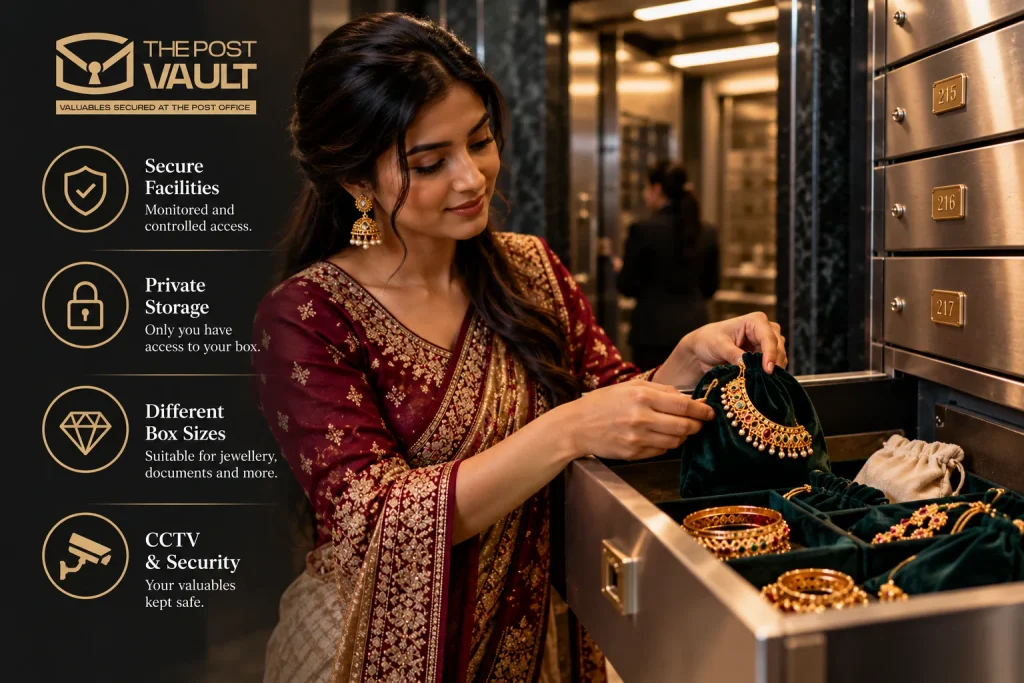
If you are storing valuable Indian jewellery or Asian gold, the security features of safe deposit boxes matter a lot. Here are some features worth checking before depositing valuables.
Controlled Access
A professional facility should have strict controls over who can enter the storage area. Access may involve identity verification, registered customer credentials, authorization procedures, or other controlled-entry measures. Only authorized people should be able to access the vault area.
Surveillance Systems
Look for facilities that use continuous security monitoring and strategically placed surveillance cameras. A well-designed surveillance system can help monitor entry points, corridors, and other important areas of the facility. Ask the provider how long security footage is retained and how access to that footage is controlled.
Alarm Systems
A secure facility should have appropriate alarm systems designed to detect unauthorized entry or other security events. Different facilities may use multiple layers of alarms rather than relying on a single system.
Strong Vault Construction
The physical structure surrounding the safe deposit boxes is important. Ask about the construction of the vault, the type of locking system used, and how the boxes are protected from unauthorized access. A strong box inside a poorly secured environment does not provide the same level of protection as a box located within a professionally designed security facility.
Secure Key and Credential Management
Protecting physical keys, access cards, and other credentials is an essential part of maintaining strong security. Every access credential should be carefully issued, monitored, stored, and replaced when required. In the event of a lost, stolen, or compromised credential, clear procedures should be in place to assess the risk, secure the affected box, investigate the incident, and update the lock or access method if necessary.
At The Post Vault, controlled access procedures add an extra layer of protection, helping ensure that safe deposit boxes can only be accessed by authorised individuals. This structured approach helps safeguard valuables while maintaining strict control over who can enter and access each box.
Privacy
Privacy is another important consideration when storing valuable jewellery. A facility should have procedures that limit unnecessary exposure of customer information and belongings. Ask how customer identity, access information, and box activity are handled.
Why Does Indian Jewellery Need Careful Storage?
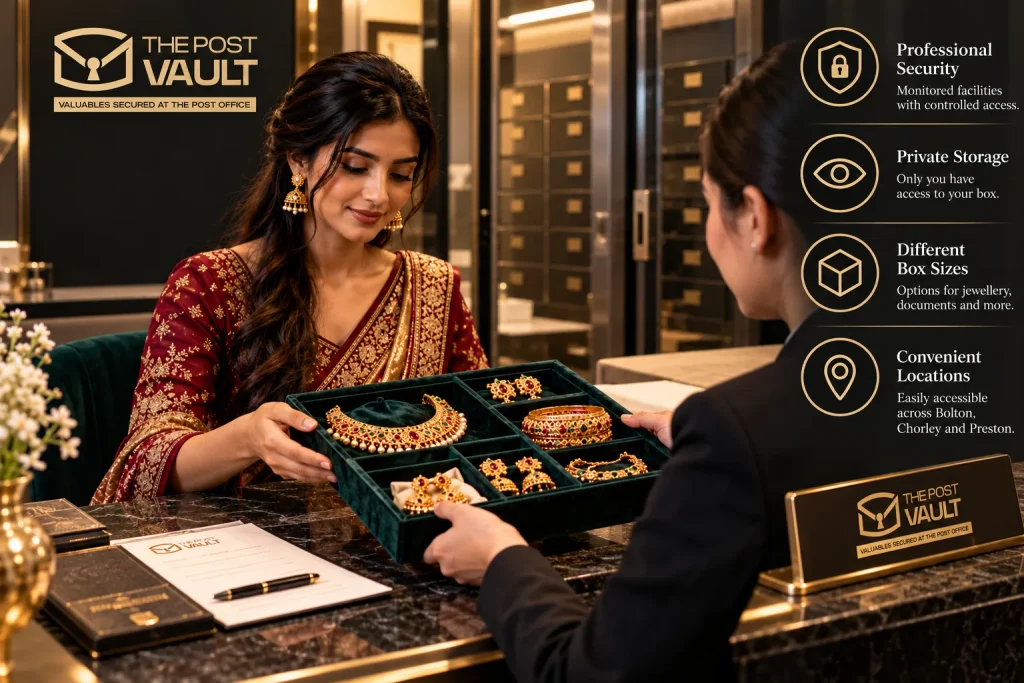
Why do gold and jewellery need proper storage? Indian jewellery often features intricate craftsmanship, making the right storage environment especially important. A single bridal set may combine gold, gemstones, and detailed metalwork. This is why choosing Gold Safe Deposit Boxes can be a practical solution for protecting valuable pieces. If you’re wondering where to store gold, The Post Vault can provide a controlled environment designed to help safeguard jewellery when it is not being worn.
Different materials respond differently to their surroundings. From moisture and friction to chemicals and dust, these everyday factors can gradually affect the appearance, condition, and longevity of valuable pieces. Here are some of the factors to consider:
- Moisture: Humidity can contribute to tarnishing and may affect certain jewellery materials.
- Friction: Repeated rubbing can create scratches or gradually wear away plating.
- Chemicals: Perfume, hairspray, lotions, chlorine, and cleaning products can affect metals, finishes, and some gemstones.
- Pressure: Heavy pieces placed on delicate jewellery can bend or damage components.
- Dust: Dust can collect in intricate designs and settings, particularly when jewellery is left exposed.
How Can The Post Vault Help You?
Your Indian jewellery and Asian gold may be worn for special occasions, but their value can last for generations. At The Post Vault, we provide private safe deposit boxes where important possessions can be stored away from everyday risks at home. With controlled access and privacy-focused procedures, we offer practical storage options for customers looking for safe deposit boxes in Bolton, safe deposit boxes in Preston, or safe deposit boxes in Chorley. Whether you are storing a bridal jewellery set, inherited gold, or pieces you wear only on special occasions, a private safe deposit box can help protect your collection while keeping your valuables under your ownership and control.
Conclusion
Indian jewellery and Asian gold are often purchased for today but kept for tomorrow. A necklace may begin as bridal jewellery, become a treasured family piece, and eventually be passed to another generation. Knowing how to store Indian jewellery properly can play an important role in keeping its beauty, condition, and story intact.
For valuable pieces that are rarely worn, a secure safe deposit box can provide an additional layer of physical protection away from everyday household risks. The Post Vault provides professionally managed private safe deposit boxes designed to give valuable jewellery and gold a secure place to stay when they are not being worn. When your jewellery carries generations of memories, where you keep it matters almost as much as how carefully you wear it
Frequently Asked Questions
What is the best way to store Indian gold jewellery?
Clean and completely dry your jewellery before storage, then place each item in a separate soft pouch or compartment. For valuable pieces that are rarely worn, Gold Safe Deposit Boxes can provide an additional layer of physical protection.
What are the effects of using plastic bags to store jewellery?
Plastic bags may not be ideal for long-term jewellery storage, particularly when moisture becomes trapped inside. This can contribute to tarnishing and may affect certain finishes or materials. Soft, breathable jewellery pouches or fabric-lined compartments are generally more suitable for separating and protecting individual pieces.
What is the difference between home vs private vaults for jewellery storage?
Home storage can be convenient for jewellery that is worn regularly, but valuable pieces remain exposed to household risks such as theft, accidental damage, or loss. Home vs private vaults for storage is therefore largely a matter of convenience, accessibility, security arrangements, and the value of the jewellery being stored.
What are the differences between banks vs private vaults?
Both banks and private vault providers may offer safe deposit boxes, but their access arrangements, fees, security procedures, and availability can differ. When comparing banks vs private vaults, review the specific terms offered by each provider rather than assuming they provide identical protection.
What are the biggest jewellery storage mistakes?
Some of the biggest jewellery storage mistakes include storing multiple pieces together, leaving jewellery damp, using unsuitable plastic packaging, exposing pieces to chemicals, placing heavy jewellery over delicate designs, and keeping valuable collections in easily accessible locations.
How can The Post Vault support long-term storage of Indian jewellery and gold?
The Post Vault provides private safe deposit boxes for valuables that may not be used frequently but need secure, dedicated storage. For those considering long-term storage for Indian jewellery or Asian gold, we offer controlled access and an added layer of physical protection.